The Mom Test by Rob Fitzpatrick: Read Smarter Customer Conversations
If you want to build a product, start a business, or test an idea, you need real feedback—not polite compliments. This page helps you read a short, practical book and use it to level up your English at the same time (with help from Fluently app).
About the Book
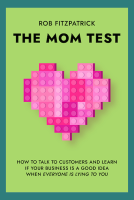 Title: The Mom Test
Author: Rob Fitzpatrick
Genre: Business
Year of Publication: 2013
Pages: ~136
This is a compact book about how to talk to customers in a way that gives you useful truth, not “nice” answers.
Summary: What the Book Is About
The Mom Test teaches you how to ask better questions when you want feedback on an idea. The main problem is simple: if you ask, “Do you like my idea?” people often say yes, even if they do not mean it. The book shows how to focus on the other person’s real life: what they do now, what problems they have, and what they already pay for or spend time on. You also learn how to notice “good signals” (real actions) and avoid “bad signals” (empty praise).
“It’s a bad question and everyone will lie to you at least a little.”
English Level
- CEFR: B1
- Learners preparing for: IELTS 5.5 (or similar level tests)
Why B1? The writing is direct and simple, but you will meet startup and sales words that are common in US business English.
Why This Book Helps English Learners
This book is short, so it’s perfect for active reading. You can read one chapter, take notes, and practice speaking about it the same day.
Skills you build
-
Reading: short chapters, clear logic, fast progress
-
Vocabulary: startups, interviews, product, pricing, problems, solutions
-
Idioms & spoken style: casual business phrases, short “punchy” sentences
-
Grammar in context: questions, conditionals (“If you… then…”), modals (“should,” “might”), comparisons
Useful vocabulary themes to track
-
Customer interviews: ask, probe, clarify, follow up
-
Evidence: prove, confirm, validate, signal, assumption
-
Money & time: budget, cost, pay, spend, prioritize
-
Decisions: commit, choose, reject, delay, risk
Estimated unique words: ~3,000–5,000 (depends on edition and how you count unique word forms)
Mini study plan (15–20 minutes per day)
-
Read 3–5 pages and underline “action words” (verbs).
-
Write 5 simple questions you could ask a real user.
-
Say 3 sentences out loud: What I learned / What surprised me / What I will try next.
Bad questions vs better questions
| Goal | Bad question (often gets fake “yes”) | Better question (gets real data) | Why it works |
|---|---|---|---|
| Test interest | “Would you use this?” | “How do you solve this today?” | Focuses on current behavior |
| Check problem | “Is this a big problem?” | “When was the last time this happened?” | Adds time + real example |
| Learn priority | “Do you want this feature?” | “What else have you tried?” | Shows effort and alternatives |
| Check money | “Would you pay for it?” | “What did you pay for a similar solution?” | Looks for real spending |
| Avoid bias | “What do you think of my idea?” | “Tell me about your workflow.” | Keeps your idea out of the question |
User Reviews
⭐⭐⭐⭐⭐ “Short, sharp, and practical.”
It feels like advice from someone who has done many real interviews. You can apply ideas the same day.
⭐⭐⭐⭐ “It changed how I ask questions.”
I stopped pitching and started listening. The quality of answers got much better.
⭐⭐⭐⭐ “Great for founders and product people.”
It’s simple, but the rules are strict — and that is why it works.
Average Rating: 4.4 / 5
Did You Know?
-
The core idea is that “nice feedback” is often not true feedback—especially when people want to be supportive.
-
The book is known for one simple rule: talk about the customer’s life, not your idea, to reduce biased answers.
-
Many founders use the book as a “checklist” before doing customer discovery, because it is short and easy to revisit.
Similar Books You Might Enjoy
-
The Lean Startup — Eric Ries
-
Running Lean — Ash Maurya
-
Talking to Humans — Giff Constable
These books also focus on testing ideas with real people and building with evidence, not guesses.
❓ FAQ
What is “The Mom Test” in simple words?
It means: ask questions in a way that even your mom can’t “protect your feelings” with a polite answer. You want truth you can act on.
Is this book only for startups?
No. It helps anyone who needs feedback: freelancers, job seekers, designers, marketers, and managers.
How many customer interviews should I do?
Do enough to see patterns. Start small (5–10), write down what you hear, and keep going until answers repeat and you can test a clear next step.
What is the biggest mistake the book warns about?
Pitching too early. When you explain your idea first, you push people into being nice instead of being honest.
Can this book help my English speaking?
Yes. It gives you short, useful question patterns you can reuse in real conversations—especially in US business settings.