The 7 Habits of Highly Effective People by Stephen Covey on Fluently app
This is one of the most practical books about personal growth and everyday effectiveness. It is not about “quick tricks.” It is about building habits that help you make better decisions, work with people, and stay consistent—skills you can also practice while learning English with Fluently app.
About the Book
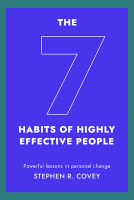 Title: The 7 Habits of Highly Effective People
Author: Stephen Covey
Genre: Personal Growth
Year of Publication: 1989
Pages: 432
Summary: What the Book Is About
The book explains seven habits that help you become more effective at work and in life. It starts with personal responsibility and self-control. Then it moves to teamwork and communication. Finally, it ends with a habit about renewal—keeping your energy and skills strong over time. The main idea is “inside-out” change: you improve your results by improving your thinking, values, and daily actions. Each habit is explained with simple examples, so you can apply it to your schedule, goals, and relationships.
“I am not a product of my circumstances. I am a product of my decisions.”
English Level
C1 — Learners preparing for IELTS 7.0 (or a similar exam score).
Why C1 is a safe recommendation:
-
Some chapters use abstract ideas (values, principles, paradigms).
-
Sentences can be long and structured.
-
You will see many formal connectors (therefore, however, in other words).
If you are B2, you can still read it—just read slower and take notes.
Why This Book Helps English Learners
This book is great for learners who want strong, professional English and clear thinking language. You will meet words that appear in US workplaces: priorities, accountability, goals, collaboration, and trust. You also learn how to express ideas politely and clearly—useful in meetings, interviews, and emails.
Language skills it develops:
-
Reading: understanding structured arguments and examples
-
Vocabulary: work, leadership, time management, and self-improvement terms
-
Idioms & set phrases: common “work English” patterns (not slang-heavy)
-
Grammar in context: modals (should/could), cause–effect, contrast, and conditionals
Estimated number of unique words: ~9,000–12,000 (depends on edition and how you count word forms)
Three smart ways to read it (and learn more English)
-
Read in small sessions (10–15 minutes). This book is concept-heavy, so short sessions work better than long ones.
-
Collect “reusable sentences.” Save lines you can say at work: “Let’s focus on the main priority,” “What is the next step?”
-
Repeat the same chapter twice. First time: understanding. Second time: language practice.
The 7 habits (simple names)
-
Be Proactive (you choose your response)
-
Begin with the End in Mind (clear goals)
-
Put First Things First (priorities and time)
-
Think Win-Win (fair cooperation)
-
Seek First to Understand, Then to Be Understood (listening first)
-
Synergize (better results together)
-
Sharpen the Saw (renewal and balance)
Habit → the English you can practice
| Habit (short) | What it trains in real life | English practice idea |
|---|---|---|
| Be Proactive | responsibility and calm choices | Write 5 “I will…” sentences for your week |
| End in Mind | clear goals | Summarize your goal in 3 simple lines |
| First Things First | priorities | Practice “must / should / can” planning sentences |
| Win-Win | negotiation | Learn polite compromise phrases |
| Understand First | listening | Turn statements into questions |
| Synergize | teamwork | Practice agreeing/disagreeing politely |
| Sharpen the Saw | consistency | Build a weekly routine vocabulary list |
Vocabulary themes you will meet often
-
time and priorities (schedule, urgent, important)
-
relationships (trust, respect, empathy)
-
leadership (influence, responsibility, integrity)
-
problem solving (solutions, trade-offs, outcomes)
Quick “study tasks” you can do after each chapter
-
Write 3 key points in simple English.
-
Pick 10 words and make your own sentences.
-
Say a 30-second summary out loud (record yourself if you can).
User Reviews
⭐⭐⭐⭐⭐ “The habits are simple, but they go deep. I started planning my week better and I communicate more clearly at work now.”
⭐⭐⭐⭐ “Some parts feel formal, but the ideas are strong. The examples helped me apply it to my goals.”
⭐⭐⭐⭐⭐ “Very useful for leadership and teamwork. I liked the focus on listening and long-term consistency.”
Average Rating: 4.3 / 5
Did You Know?
-
The book is built around an “inside-out” approach: it focuses on principles and character before techniques.
-
The habits are often grouped as Private Victory (Habits 1–3), Public Victory (Habits 4–6), and Renewal (Habit 7).
-
Habit 7 (“Sharpen the Saw”) is about protecting your energy—so you can keep improving, not burn out.
Similar Books You Might Enjoy
-
Atomic Habits — James Clear
-
Getting Things Done — David Allen
-
Essentialism — Greg McKeown
❓ FAQ
Is this book still useful today?
Yes. The habits focus on timeless skills: priorities, self-control, listening, and cooperation. These skills still matter in modern work and daily life.
Do I have to follow the habits in order?
Not strictly, but many readers find the order helpful. The first habits focus on personal responsibility before teamwork and communication.
Is it a hard read for non-native English speakers?
It can be challenging because it uses abstract words (principles, paradigms, integrity). If you are B2, read slowly and use summaries.
What is the biggest “habit” for communication?
Habit 5: “Seek First to Understand, Then to Be Understood.” It teaches you to listen carefully before you try to persuade or explain.
How can I use this book to improve my English speaking?
After each chapter, choose 5–7 useful sentences and practice them aloud. Focus on calm, clear phrases you can use at work and in real conversations.